SuperChar approval to create new opportunities for Gladstone Region
Published on 04 November 2026
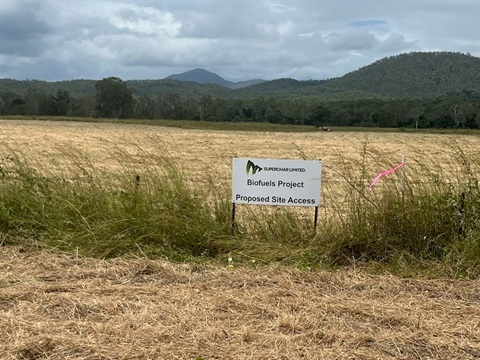
A proposed $30M bio-pellet manufacturing facility at Boynedale is set to bring new investment, jobs and business opportunities to the Gladstone Region following development approval from Gladstone Regional Council.
The SuperChar project will use bana grass to produce bio-pellets, which can be used as a partial replacement for coal in industrial boilers.
The proposed facility is expected to initially produce up to 35,000 tonnes of bio-pellets each year and create around 25 jobs across farming and manufacturing operations.
Previous trials at Rio Tinto’s Gladstone refineries have shown that bio-pellets can replace up to 30 per cent of the coal used to generate steam in refinery boilers.
SuperChar plans to begin planting bana grass in late 2026, with bio-pellet manufacturing expected to commence in 2028.
Bana grass plantation trials in the region are already proving successful.
Gladstone Region Mayor Matt Burnett said the project, approved by Council on 3 November 2026, aligns with Council's Gladstone Region Economic Transition Roadmap and industrial ecosystem.
“Attracting new investment in new industries, supporting existing industries and creating jobs is what the Roadmap is all about and this project ticks those boxes,” Mayor Burnett said.
“It’s fantastic to see businesses like SuperChar developing new products and technologies to help established industries reduce emissions while creating further economic opportunities for our region.”
IMAGE: (L to R): Cr Leanne Patrick, Scott Lucke (CQG Consulting), Kristy Marks (GRC Manager Economic Development), Mike Palmer (Executive Chairman of SuperChar Limited) and Peter Lynch (CQG Consulting) pictured in February 2026 at a Community Information Session held by SuperChar Limited at the Nagoorin Community Hall in the Boyne Valley.
Mike Palmer, Executive Chairman of SuperChar Limited, said, “The Gladstone Region is an ideal location for a project of this nature, thanks to its strong connections with Rio Tinto and a dynamic industrial ecosystem that supports innovation, emerging technologies, and the growth of new industries like ours.”
“The fact that this region has a strong vision for the next ten years, an incredible level of coordination across all levels of government to see projects like this come to fruition, and a highly supportive community, played a significant role in [Tuesday's] decision. We are delighted with the outcome.”
Bana grass is a fast-growing, high energy semi-tropical grass which grows up to four metres tall.
Bana grass can be planted and harvested with the same equipment as sugar cane, with harvesting occurring twice per annum. Bana grass poses no bio-security risks and is an ideal source of biomass to produce renewable, green energy.
The pellets will be supplied to Rio Tinto’s Gladstone alumina refineries under a five-year agreement, supporting the company’s efforts to find new ways to reduce emissions from its operations.
TOP IMAGE: SuperChar paddock within the Boyne Valley.