Advanced Water Meters
Council is continuing to update existing water meter infrastructure to advanced water meter infrastructure as part of a compulsory whole-of-region, multi-year project.
More information
How to read your water meter
The following images show you how to read your water meter and keep track of how much water your household is using.
Most meters are metric and read in kilolitres.
Mechanical water meter and/or mechanical water meter with advanced water meter sensor added
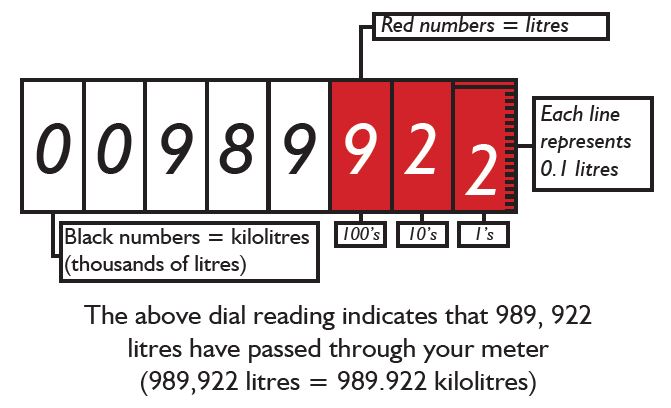
Advanced water meter
You can use your water meter reading to calculate your next water consumption bill.
Step 1: Take down your current meter reading then subtract the reading from your most recent notice
Step 2: Multiply this amount by the current water consumption charge for your water scheme
If you need help reading your water meter, or it looks different to the images above, please contact Council for assistance.
Find out how to estimate your daily water usage using our Water Usage Calculator.
Maintenance
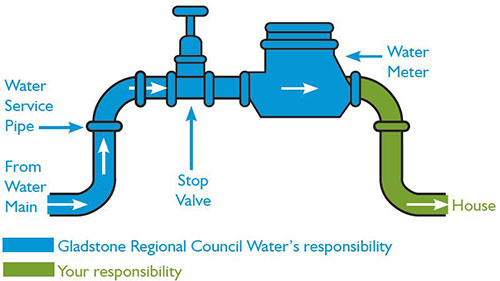
Any maintenance to water meters is the responsibility of Council and it is illegal for residents to tamper with the water meter. Should residents notice the water meter is leaking or has sustained damage please contact Council. Residents should be aware that any intentional damage to the water meter will be an expense to the owner.
Tampering is illegal
As the water service provider for the region, under the Water Supply (Safety and Reliability) Act 2008, Gladstone Regional Council is the asset owner of the reticulated water network infrastructure up to and including the water meter.
Reducing recorded consumption is an illegal practice and can result in any or all of the following consequences:
- Criminal Charges
- Wilful damage
- Theft of property
- Fraud
- Offences (Water Act)
- Unauthorised taking, supply of interfering with water
- Tampering with devices (including service)
- Connecting to mains or services without approval
- Interfering with Council’s assets
- Take water without approval.
Residents who notice damage to their water meter, or who have any queries or concerns regarding their water supply, should contact Council on (07) 4970 0700.
If your water usage has increased or you think there may be a leak on your property, follow the steps below to identify the cause and determine whether the issue may be on your side of the water meter.
Step 1: Consider possible reasons for increased water use
Your water use may increase due to everyday changes, such as:
- Installing new appliances or fixtures (e.g. dishwasher, shower head, evaporative air conditioner)
- Filling a swimming pool or spa
- Increased lawn or garden watering
- More people staying in the household
If none of these apply, a leak may be the cause.
Step 2: Check your water meter reading
Your water meter is usually located near the front boundary of your property.
- Read the numbers on the meter.
- Council records usage in kilolitres (kL) only.
- If the current meter reading is lower than the reading shown on your account, the meter may have been misread please contact Council.
Refer to How to read your water meter for guidance.
Step 3: Check for obvious leaks around your property
Even small leaks can waste a significant amount of water:
- A slow dripping tap can waste around 9,000 litres per year
- A leaking toilet can waste more than 60,000 litres per year
- Dripping taps
- Leaking toilets
- Leaks at washing machine and dishwasher connections
- Hot water systems
- Damp patches on walls, bricks, or garden areas
- Faulty pool or water tank top‑up systems
Step 4: Check your irrigation system
Irrigation systems can use large volumes of water if faulty.
- Check for broken sprinkler heads or visible leaks
- Ensure watering programs are correct (power outages can reset timers)
To check for underground irrigation leaks:
- Take a water meter reading.
- Run one irrigation station for 2 minutes.
- Take another meter reading and calculate the water used.
- Repeat for each station.
If one station uses significantly more water than others, a leak may be present.
Step 5: Check for concealed leaks using an overnight meter test
A concealed leak is a hidden leak in the pipes between the water meter and the buildings on your property.
To perform an overnight test:
- Turn off all water‑using appliances (showers, taps, washing machine, dishwasher, irrigation, fridge with water connection).
- Record both the black and red numbers on your water meter before bed.
- Factor in any toilet flushes overnight (approximately 9 litres per flush).
- Take another reading first thing in the morning.
If the meter has moved, and you are confident no water was used, this may indicate a leak on your side of the meter.
What to do if you suspect a leak
- Leaks on the property side of the meter are the responsibility of the property owner.
- If a leak is suspected, engage a licensed plumber to locate and repair it.
If you are unsure whether the leak is on your side or Council’s side of the meter, Council can help guide you through the checks.
Council is committed to water conservation. If a water leak is Council owned, it will be repaired promptly at no cost to the property owner.
Council may also contact property owners if unusually high water use is identified, to help locate possible leaks and reduce water waste.
In addition to the previous steps to solve water use fluctuations, you can make everyday changes to ensure your water use is reduced overall.
Laundry: Select a washing machine with a four-star rating or better. Front-loading washing machines can use up to 50% less water, 35% less detergent and 30% less energy than top loaders.
Bathroom: We use more water in our bathrooms than in any other part of the house so take shorter showers; install a four-star dual flush toilet to save up to eight litres with every flush; and turn the tap off while brushing your teeth or shaving to save 15 litres per minute.
Garden: Don’t overwater; mulch generously as it reduces water loss by up to 70%; and enrich your soil so it absorbs and holds more water.
For more water wise tips and water saving initiatives, click here.